Adding video sources: Difference between revisions
No edit summary |
>UNiversal |
||
| Line 42: | Line 42: | ||
==See also== | ==See also== | ||
*[[Media sources]] | *[[Media sources]] | ||
*[[File sharing]] | |||
Revision as of 10:30, 25 November 2012
Adding videos to the library/Contents
Media sources are the links that tell XBMC where your content is stored and what type of content is contained within each one. You can have multiple sources for each media type.
You can use local media, file shares, removable USB drives, etc. UPnP won't work with the library features in XBMC, but just about all the other options should be fine.
Adding sources
-
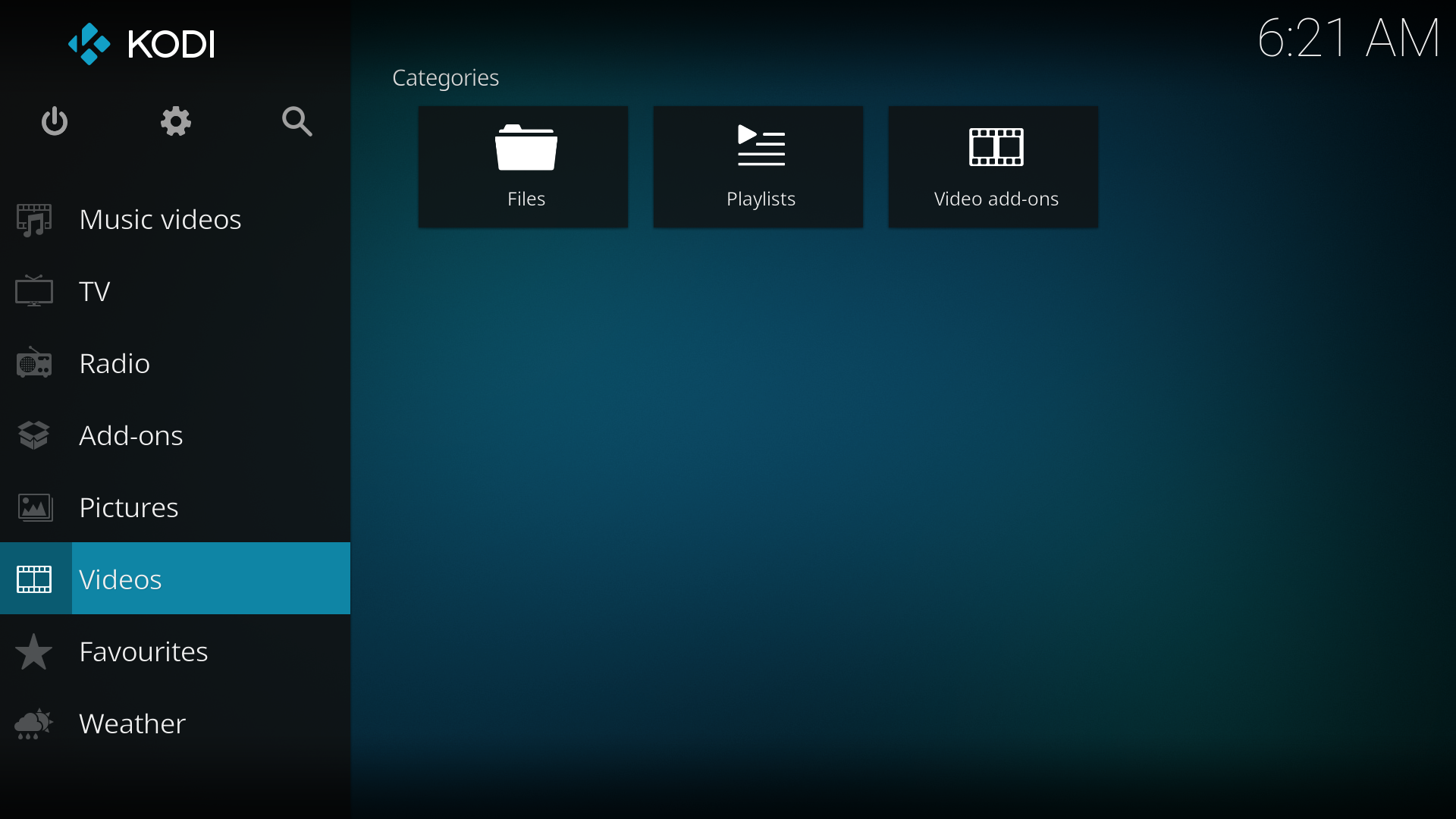 Step 1: Click "Videos" in the home screen menu.
 -
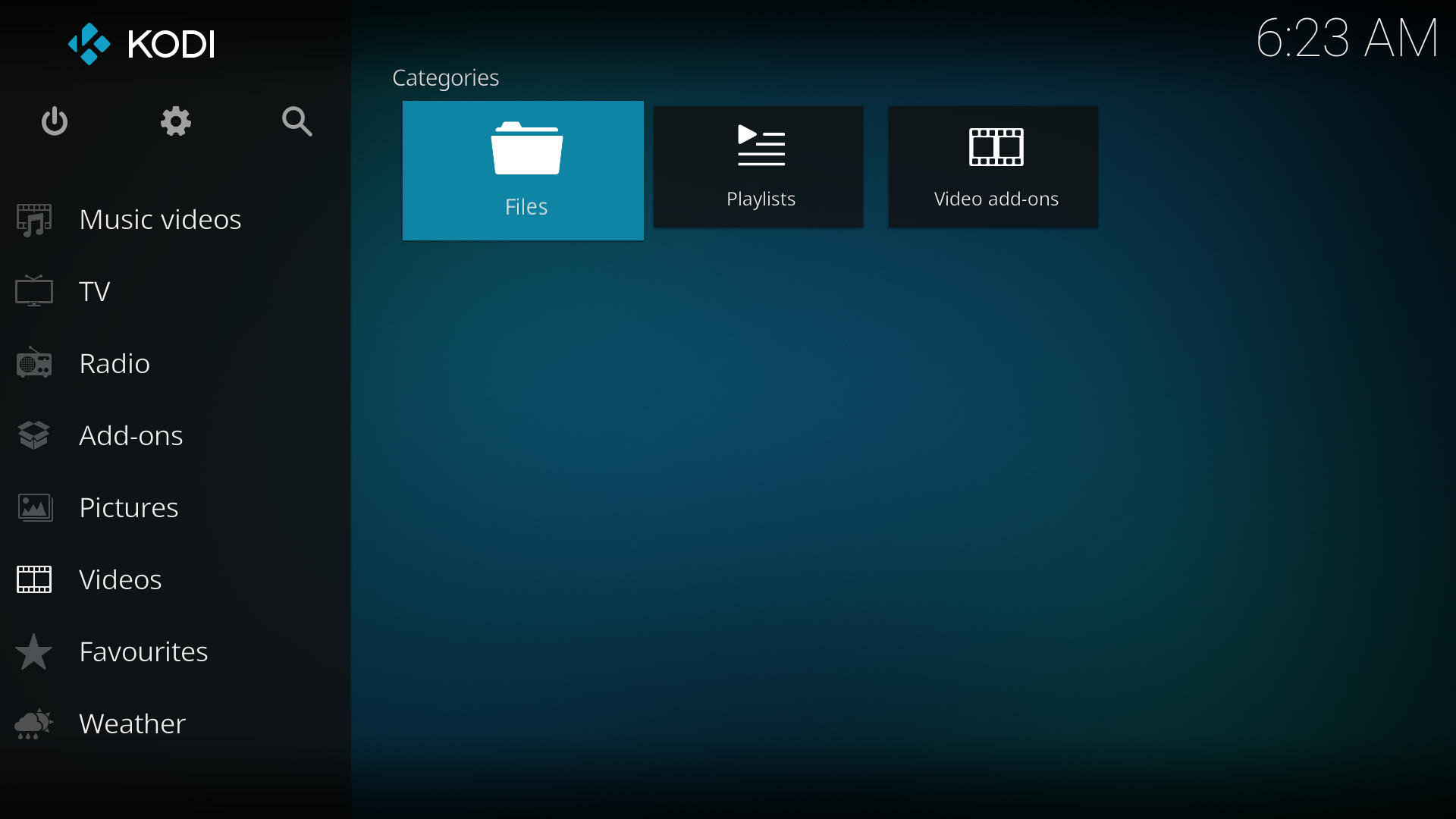 Step 2: Now click "Add Source".
 -
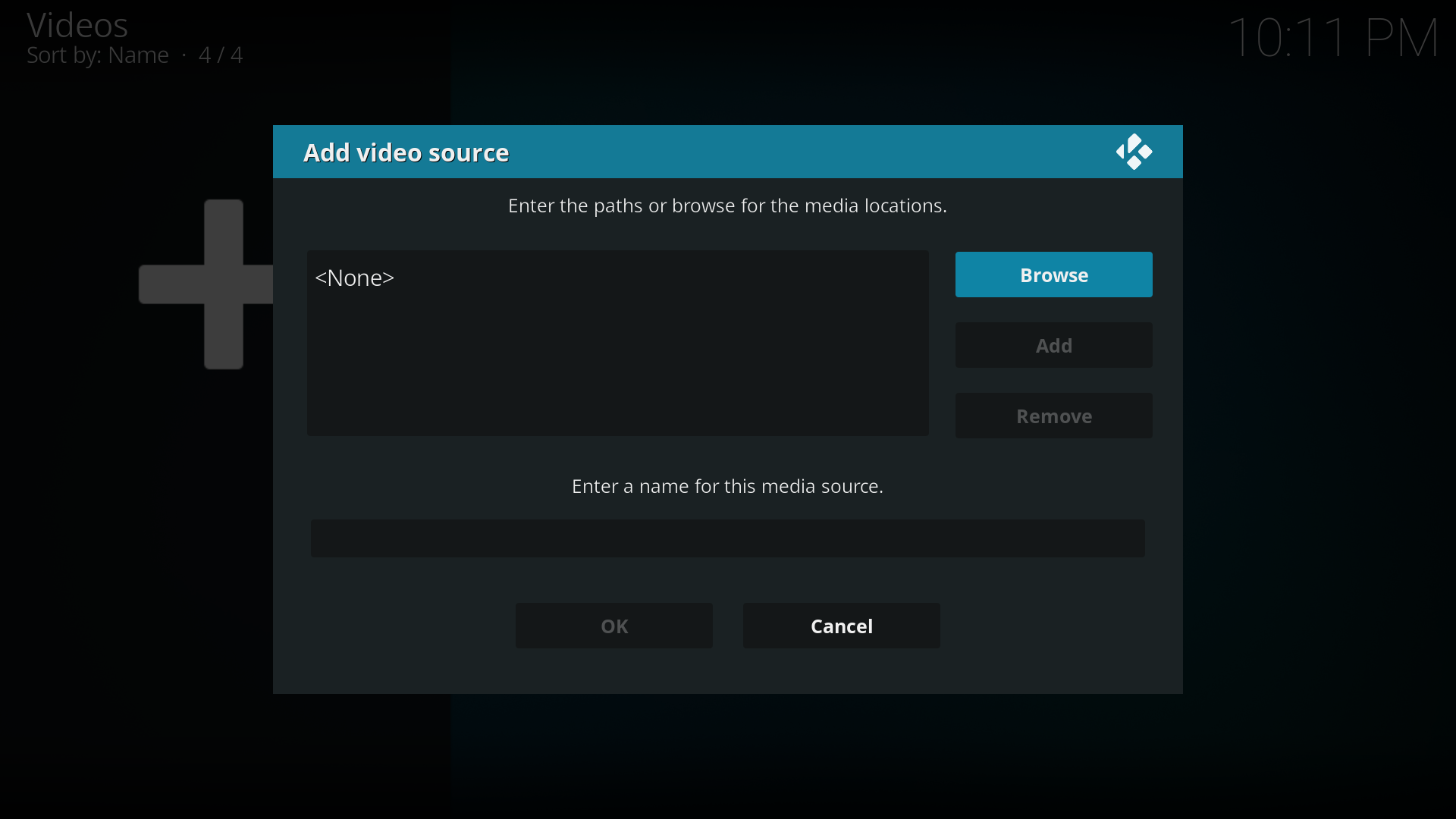 Step 3: The "Add Video Source" screen will be displayed. Then click the "Browse" button.
 -
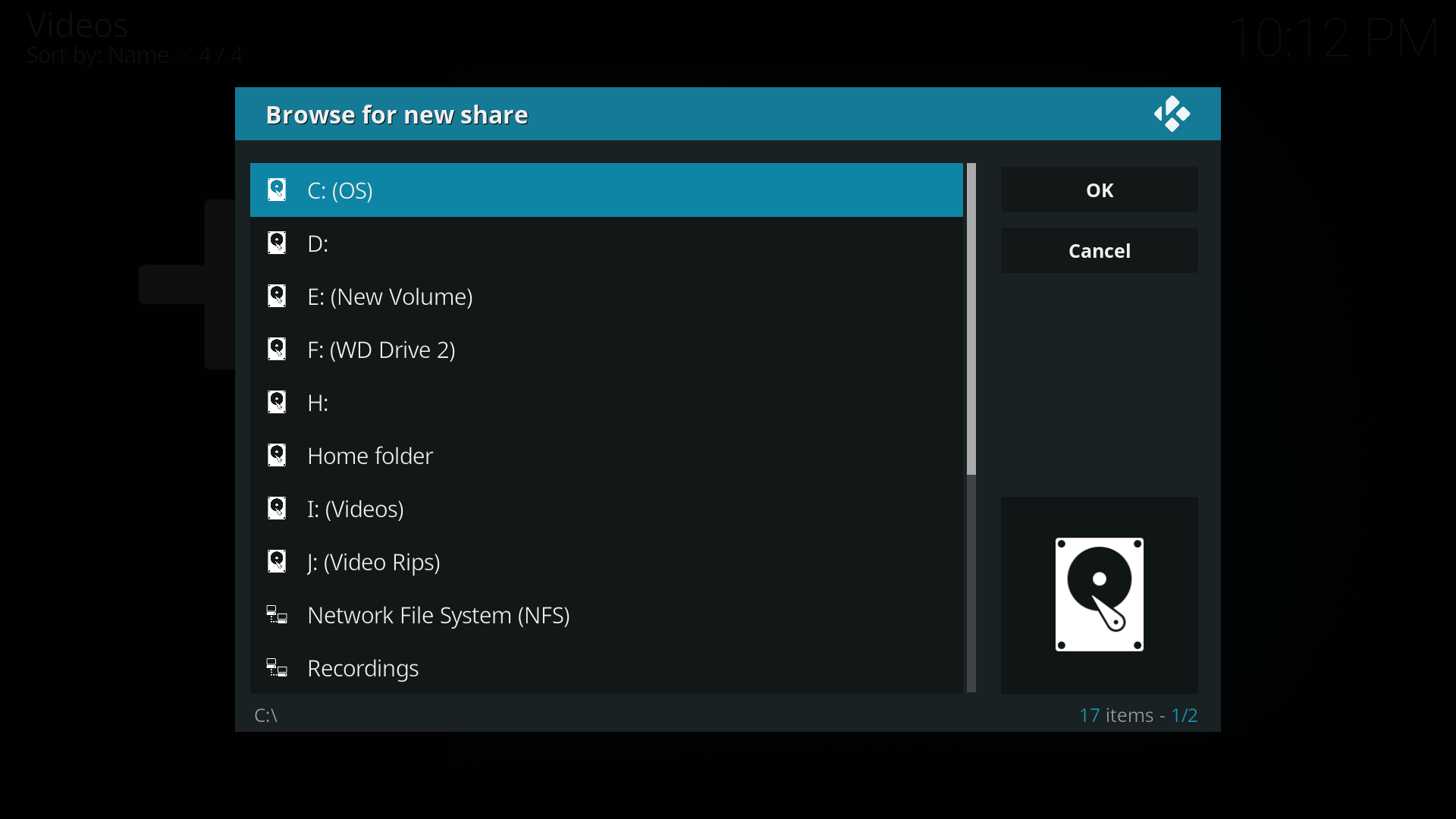 Step 4: Now browse to where you keep your videos stored. Once you have found the folder you keep your videos in, click the "OK" button. If you keep them shared on a network drive, read the Configuring PC Shares article for more information about setting up a share on your computer first.
 -
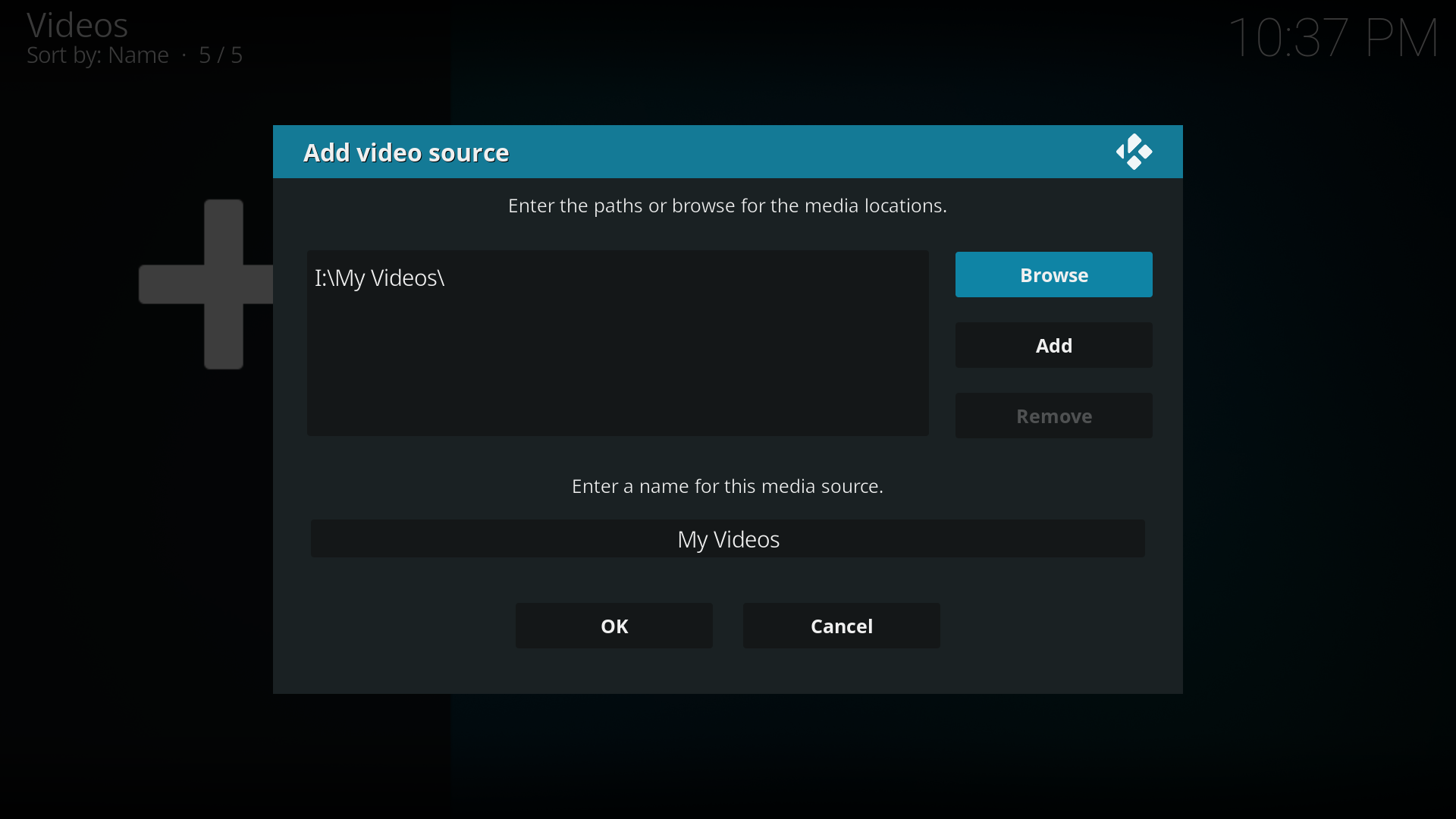 Step 5: Name this Video Source however you like. If it is a movie folder, you will probably want to name it "Movies", and if it is a TV Show folder then you will probably want name it TV Shows. The name doesn't matter to XBMC. Then click "OK".
 -
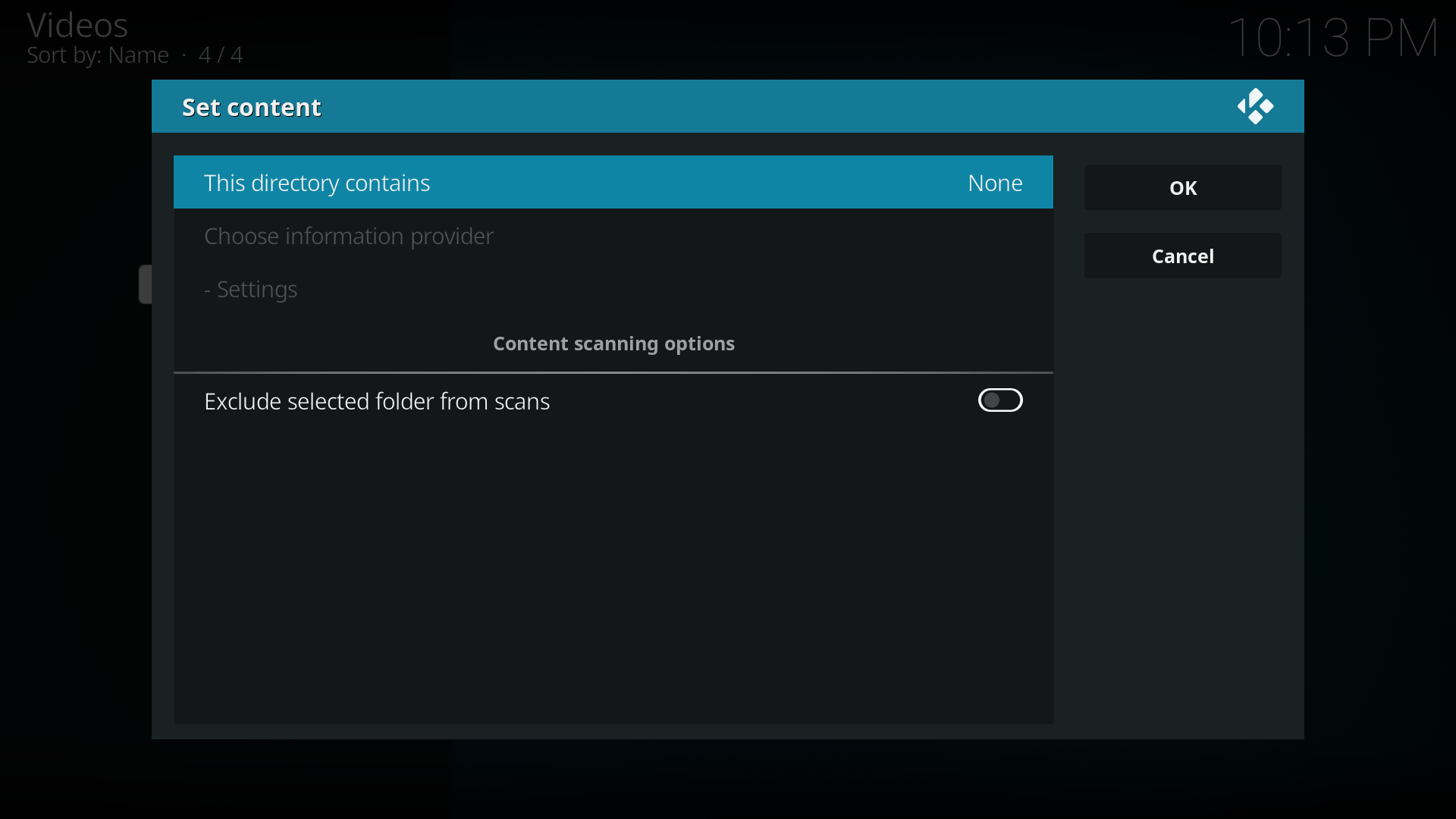 Step 6: The set content window will display, this is where you tell XBMC what type of media is in the folder. Press the down arrow until you reach the correct type (in this example movies)
 -
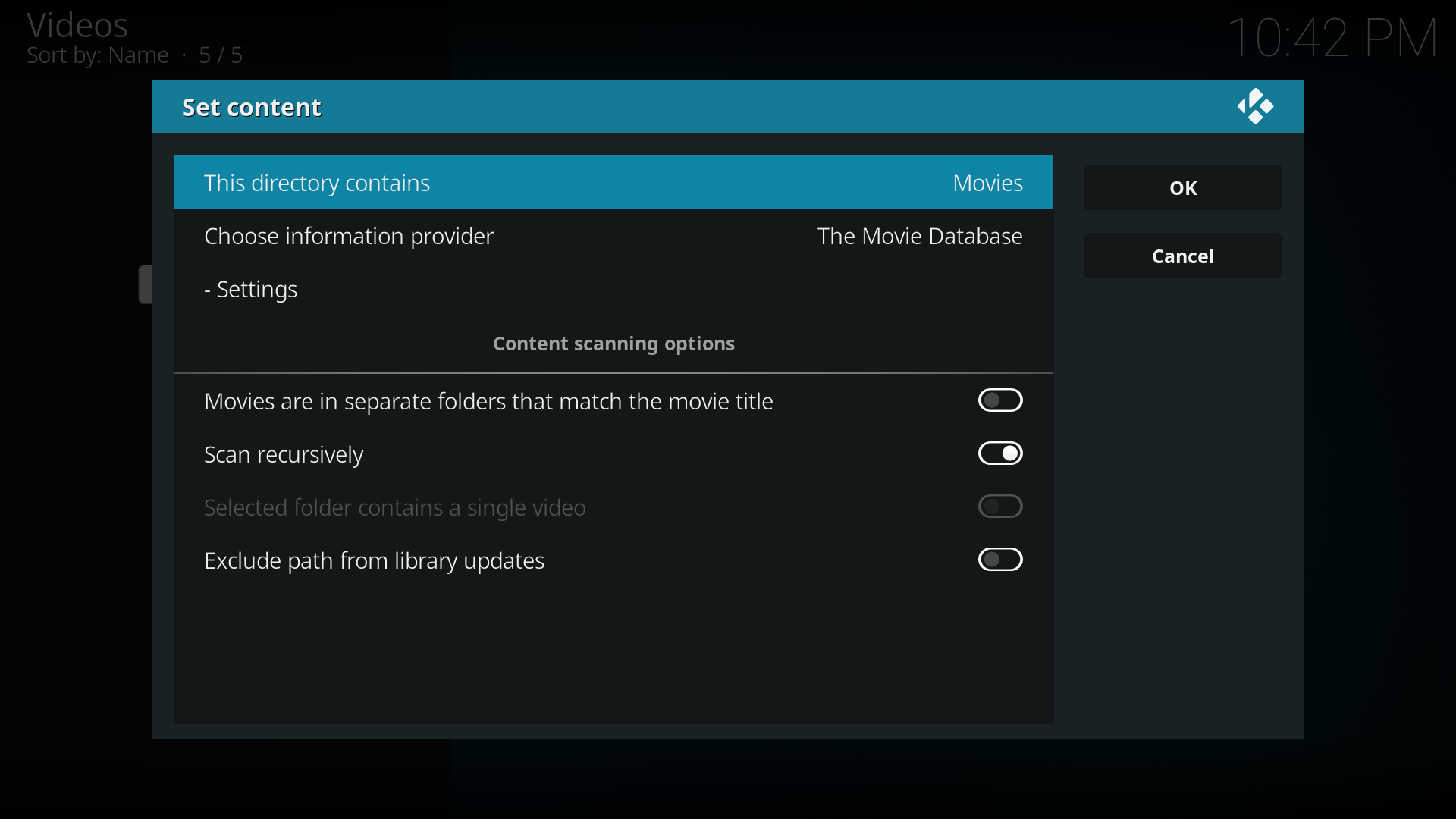 Step 7: There are a number of options underneath, see Setting content and scanning to check what options to enable. Then click "OK"
 -
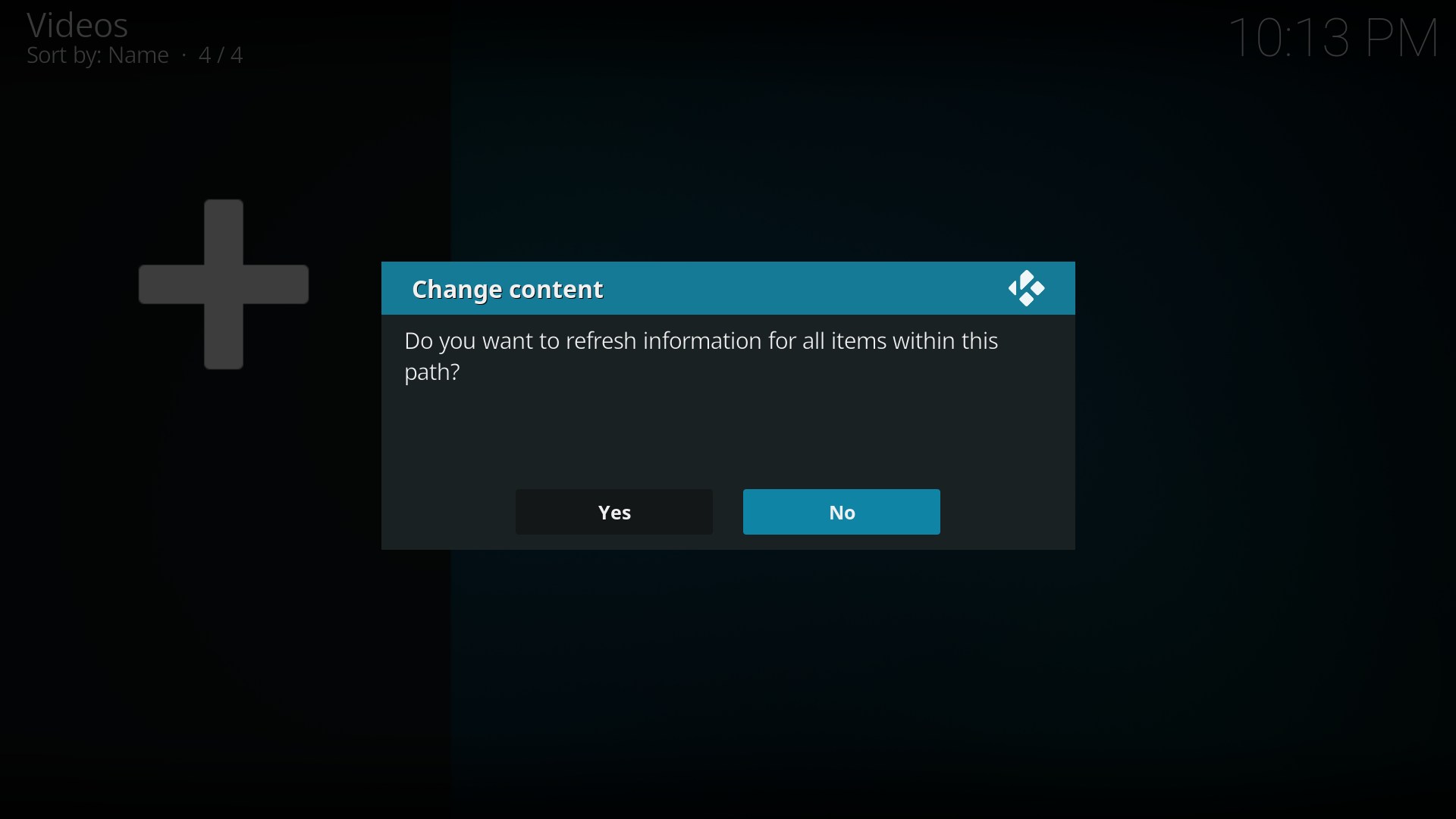 Step 8: Press Yes the scan the content to the library (if no is pressed, it can be scanned later).


Making one source for multiple locations

You might notice that XBMC has an "ADD" button in addition to a "BROWSE" button when you are adding a source. After you add your first location, you can add a second location (network or local. you can even mix them) and XBMC will show both folders as a single folder/source.
XBMC will also combine the subfolders within the source/locations. For example, For example, if you had a hard drive for TV shows, but ran out of space, you could make a second hard drive with the same folder paths and XBMC would merge them together to a single directory path. Such as
Hard drive 1/TV shows/Hard drive 2/TV shows/
and the same is true for an additional nested folder with the same way:
Hard drive 1/TV shows/American Dad/Hard drive 2/TV shows/American Dad/
You could have half of a show on one hard drive, half on another, and XBMC will show it to you as if it was in a single location by using multiple locations in a single source.